
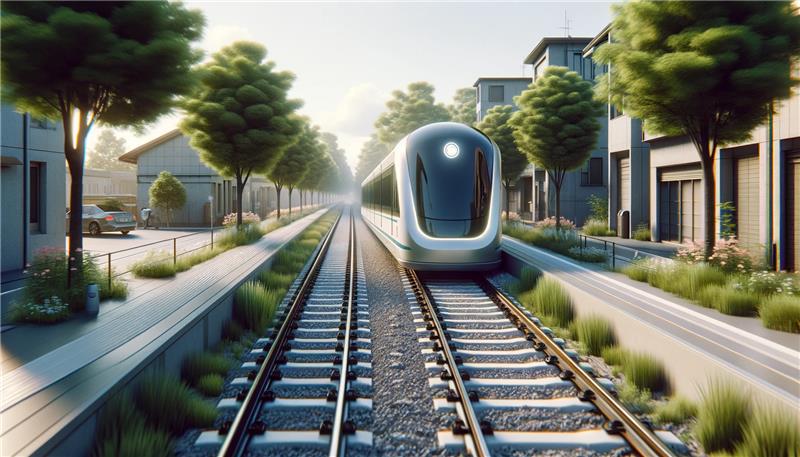
Driverless through North Rhine-Westphalia's landscapes
In North Rhine-Westphalia, innovative approaches are being pursued to redesign mobility in rural areas. Two outstanding projects, Monocab and the Aachen Rail Shuttle, are at the heart of these efforts. They offer insights into the future development of driverless rail transport, which could represent an efficient and sustainable alternative to conventional private transport.
The Monocab project at OWL University of Applied Sciences and Arts is an example of how autonomous technologies can be used to improve the accessibility and flexibility of rail transport. On-demand cabins based on an innovative monorail concept could better meet the needs of residents in rural areas.
In parallel, the Aachen Rail Shuttle, developed at RWTH Aachen University, aims to provide an environmentally friendly and cost-effective mobility solution for rural areas. This project, characterized by its energy-autonomous and locally emission-free vehicles, could play a significant role in improving the quality of life in rural communities.
Both projects illustrate the potential of driverless rail transport to play an important role in future mobility by offering an answer to the pressing challenges of rural mobility.
Source: Innocam.NRW
